"Are you ASE Certified?" - 7 Reasons why this is an important question to ask your auto technician.

Many of you know to look for that shiny blue seal on auto repair shops’ websites or to look for the term ASE certified in their bios, but do you know what that means? ASE stands for the National Institue of Automotive Service Excellence and is the industry standard for certifying automotive personnel. Let’s show you 7 reasons why it’s important for you to choose an ASE certified technician to handle the service and repairs on your vehicle.

ase-logo-350.jpg

Reason #1: ASE certification is not easy to obtain.

To become ASE Certified, technicians must pass a rigorous certification test and only 2 out of 3 people who take the test pass it on their first attempt. The exam, which covers engine repair, automatic transmission, transaxles, manual drive trains, axles, brakes and suspension, electrical systems and heating and air conditioning systems, is challenging. After passing the exam, technicians must prove they have either two years of on the job training, or one year of on the job training plus a two-year automotive repair degree to obtain their certification.

ase_mechanic.png

Reason #2: You DO NOT have to be ASE certified to work on cars in a professional setting.

Unlike many professions that require licensure before you can legally work with the general public like hair stylists or doctors, the automotive industry does not legally require ASE certification before a mechanic can work on your car. Yikes! It is up to individual auto shops, dealerships, and repair facilities to hire certified technicians. Yes, even dealerships do not always have their entire technician team ASE certified. 

IMG_0908.jpg

Reason #3: ASE certification shows dedication to the trade.

Because of reason #2, The fact a technician has spent the time and expense to further his or her education and become ASE certified indicates they are serious about their trade. Not all repair shops require their technicians to become certified. Consequently, those who do are going above and beyond what’s required of them for one reason: they want to become vehicle maintenance and repair experts. 
IMG_1113.jpg

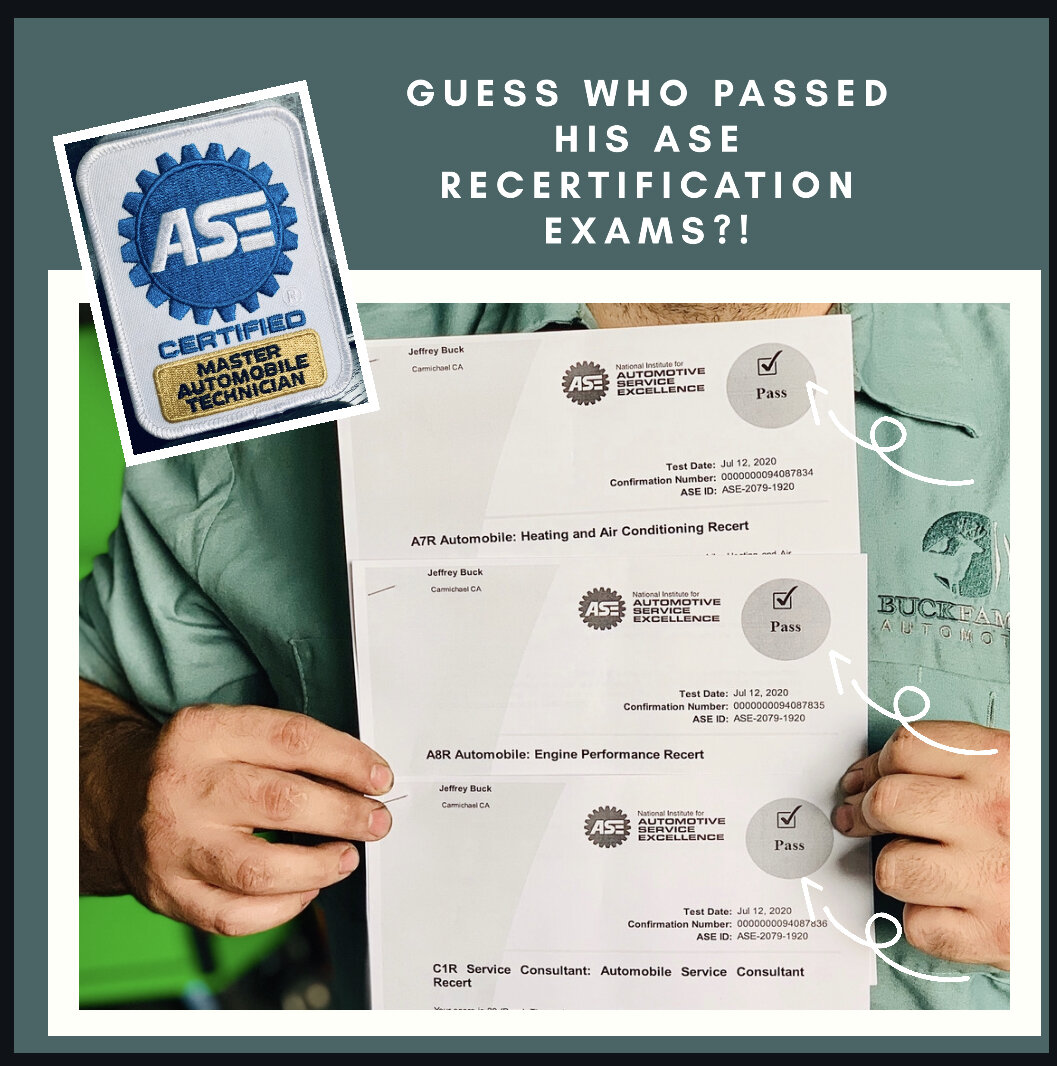
Reason #4: Your technician must re-certify every 5 years.

Technicians must retest every 5 years to remain certified and keep up with ever-changing automotive technology. This is not a one time test. To pass recertification exams, your technician must be up-to-date on his or her skill, knowledge, expertise with continued education. 

unnamed.gif

Reason #5: ASE has been around for a long time to set the standard. 

It was established in 1972 in an effort to improve the auto industry with better technicians and more ethical practices. This not only benefited the auto facilities, but consumers as well.

IMG_3586.jpg

Reason #6: ASE Certification is an easy way to signify whether or not an auto technician or automotive team is qualified to get the job done. 

Everyone has heard of horror stories of untrustworthy mechanics or technicians even being completely unqualified to complete the job on your vehicle. Finding a new mechanic if you do not have a regular can be tricky, and an ASE Certification is one of the easiest way to signify whether or not an auto technician or automotive team is qualified to get the job done.
IMG_1106.jpg

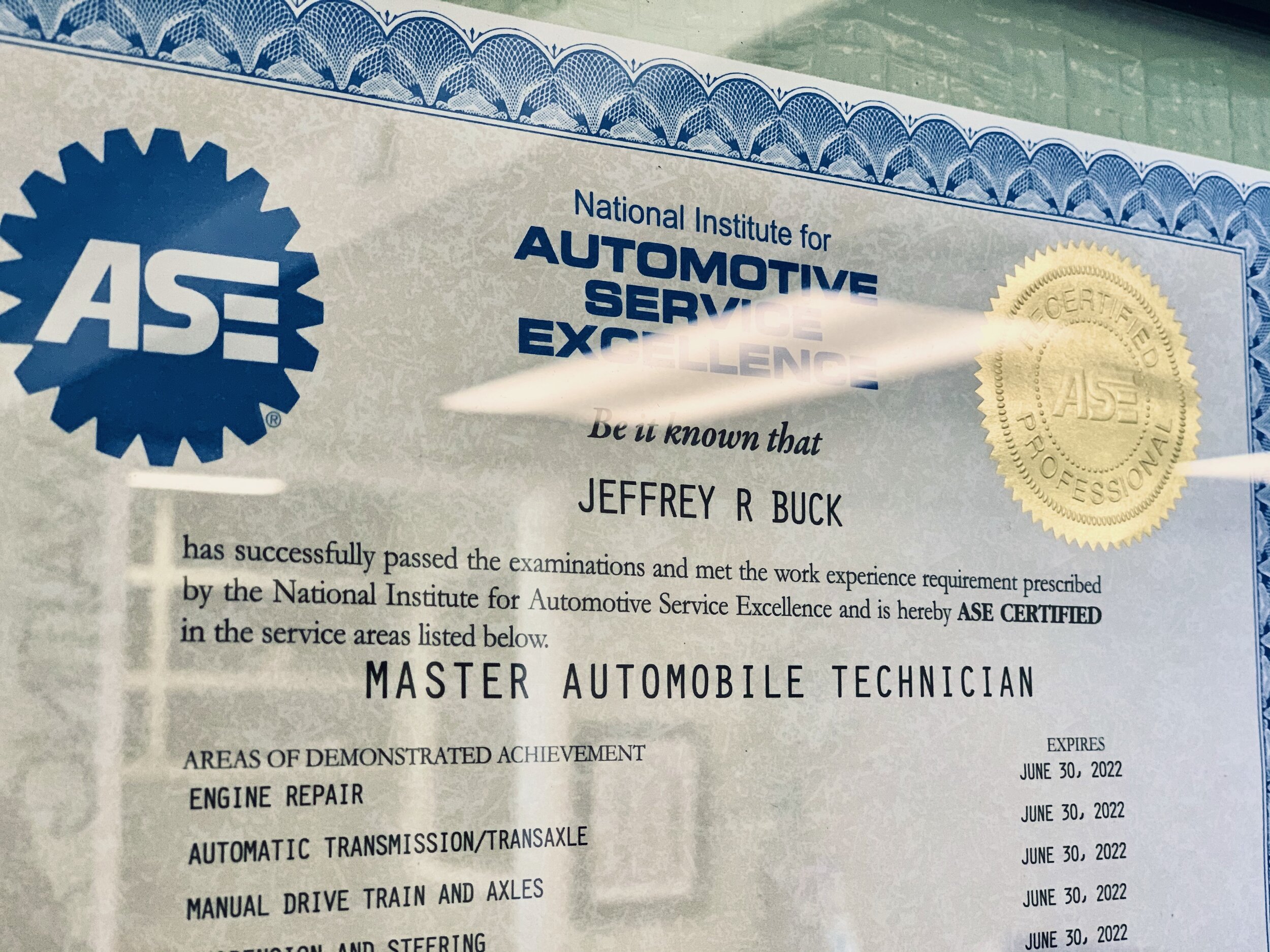
Reason #7: A few leading ASE certified technicians may test to be certified as a Master-level ASE certified technician,

the highest rank with ASE.

Owner Jeff Buck of Buck Family Automotive is proud to be Master ASE certified. Master ASE certification is when you pass eight required ASE certification exams. You only need to pass one, to become ASE certified. The eight required tests in the master technician series deal with engine repair, automatic transmissions, manual drive trains, suspension and steering systems, brakes, electrical systems and heating and air conditioning. Successfully passing all eight exams earns individuals the ASE Master Automobile Technician designation. While there are over 180,000 ASE certified technicians, there are only 67,000 Master level ASE certified. 


When you come to Buck Family Automotive, you know your vehicle will be in the best hands with Master-ASE certified owner Jeff Buck. We hope these tips help you narrow down who you choose to work on your vehicle. A little added note of information: if an auto repair shop is an “ASE certified facility” it does not automatically mean all of their technicians are certified. It simply means that the majority of their staff are certified, so be sure to ask for an ASE certified technician to work on your vehicle. The National Institute of Automotive Service Excellence continues to be the industry standard for certification and quality management, and you should always look for that blue seal when you are searching for your auto repair home. 

IMG_1110.jpg

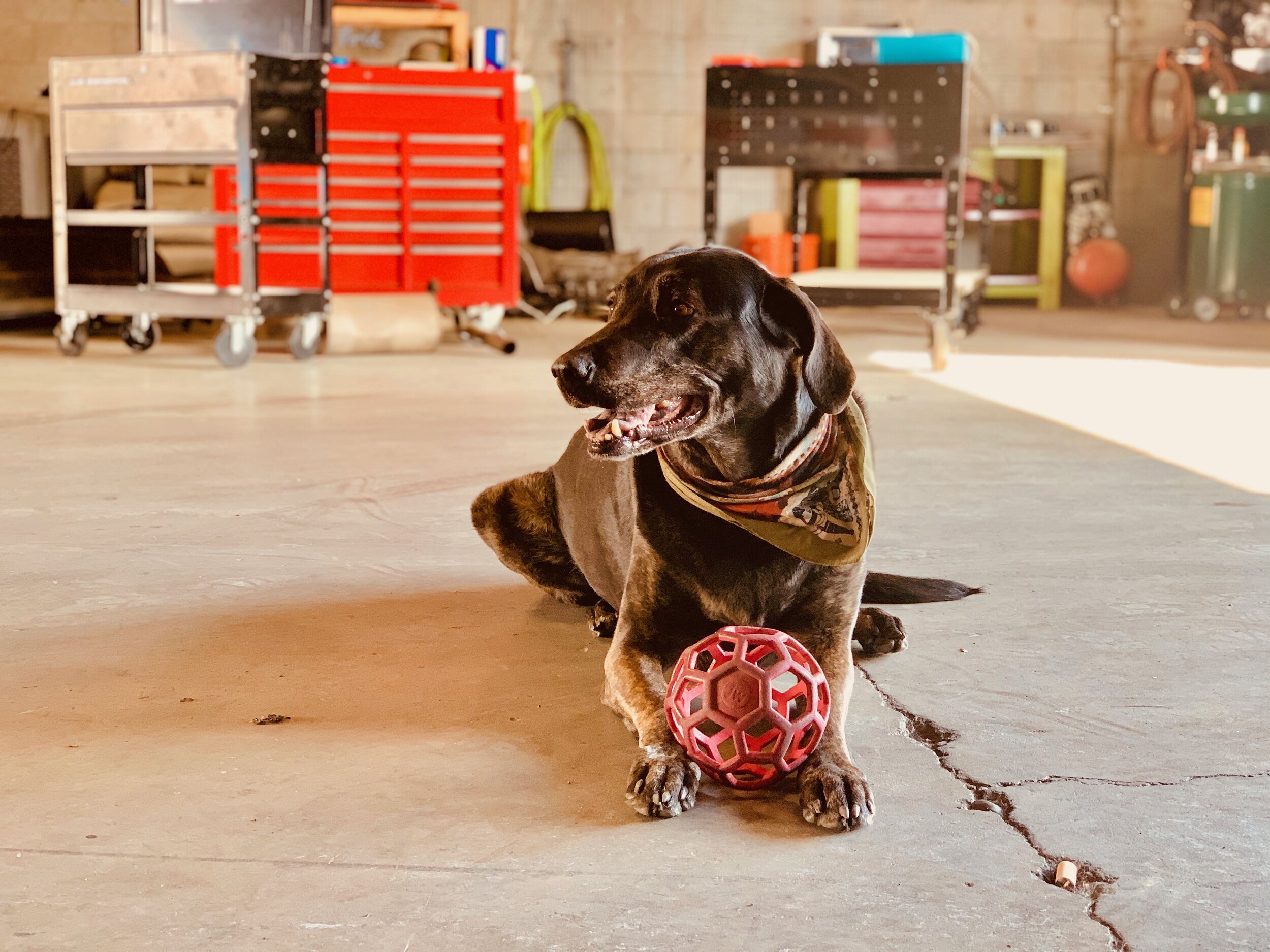
A Day in the Life of Molly, The Shop Dog

Hi I’m Molly! Be sure to check out my video below!!

I’m an 8 year old Black Lab- German Shorthaired Pointer- Plott Hound Mix and was rescued as a puppy by Rosie. I was found with my brothers and sisters in a box on the side of the freeway, and was brought to a local rescue! Rosie didn’t pick me; I picked her by sitting in her lap, and the rest is history!

I love to play ball, go swimming, hike and play with my human little brother, dig and splash in my kiddie pool, and I LOVE going to work with my mom and dad. I used to have to stay home or go to doggy daycare when they would work, but now that they have their own automotive repair shop, every day is bring your (doggy) kid to work day! I hear that there are a few of us shop dogs in the area, it’s a big job!

I have very important work to do during the day too!

IMG_4579.jpg

I help check in deliveries from the parts vendors (some even give me treats to thank me)

I hang out with my dad and remind him its important to take a little break from time to time and play ball to de-stress

I keep watch from behind the gate to make sure there are no stranger-dangers

I watch the shop from my comfy couch while Dad checks in clients and handles the office tasks

I go get lunch with Mom and sometimes she sneaks me some of Dad’s to-go food before we get back.

I take a long nap in the afternoon in my own room to make sure i have lots of energy to play ball later after-hours

Sometimes I hear people ask about me and want to meet me while they are waiting for their service, so I make sure to smile and wag my tail a lot and show off my latest bandanas.

And after work Dad and I rest on my couch and I get lots of love!

Here at Buck Family Automotive, we love the bond we have with each other, our dog included. Molly keeps the morale high around here, and enjoys her days as a shop dog. We keep her away from all Client areas, but we are always happy to bring you to her to say hi if you want! Enjoy our short video below (make sure your sound is ON) to see a day in the life of Molly!

There Are More Essential Vehicle Fluids Than Just Your Engine Oil- Here's What They Are and Why It's Important to Keep Them In Top Shape

eZy Watermark_08-05-2020_03-09-09PM.JPG

When you think about the “routine” maintenance services for your vehicle, what comes to mind? We would assume oil changes, tire rotations, and looking at the brakes. This is all very true, but there are other fluids that are essential to the upkeep and safety of your vehicle and it’s important to know what they are and how to keep them in top shape. 

eZy Watermark_08-05-2020_03-06-34PM.JPG

Transmission Fluid

Just as your engine uses oil to lubricate and cool its internals, transmissions use specially designed transmission fluid for the same purpose. The quality and color of your fluid can speak a lot about the health of your transmission as well. What does a healthy fluid look like? Depending on your transmission model and design, it may be a variation of a pink-red color, and turns browner and darker as it gets closer to be needing it’s fluids exchanged and replaced. CVT transmissions sometimes have gold or green fluid. What we hate to see is very dark, smelly, or worse, fluid with metal shavings in it. This means there is possible damage to your transmission itself. Low levels can indicate a leak, so it’s important to keep an eye on your transmission fluid to prevent more expensive repairs down the road. 

eZy Watermark_08-05-2020_03-21-08PM.JPG

Brake Fluid

 When brakes are brought up you think of your pads and rotors, but there is also Brake Fluid that needs to be in good condition to keep your vehicle stopping as it should when you press the brake pedal. Brake fluid can last many many years depending on your vehicle, but it can become contaminated, so it's important to have it inspected for moisture and copper content and contamination.Water in the brake lines lowers the boiling point of the fluid, so your stopping ability can diminish as heat in the system increases. In addition, over time the moisture can cause internal corrosion in the brake lines, calipers, the master cylinder and other components.Generally, brake fluid can be clear or light brown in color, and will darken or become murky with age/ contamination. Engine Oil keeps your car going, and Brake Fluid keeps your car stopping, but is often not discussed as an essential fluid. 

eZy Watermark_08-05-2020_03-08-45PM.JPG

Coolant

Coolant circulates, making sure your vehicle’s components are operating at the right temperature. It is a common misconception that your coolant is related to your A/C system, but it can be related to your heater. When you have low coolant or coolant issues it can mess with your temperature regulation which can cause serious havoc on your vehicle. Without enough coolant, your engine may overheat. Engine Cooling Problems could arise if you don’t have the right mixture of coolant, which is typically a 50/50 mix of antifreeze and water. Finally, a leak in the system could contaminate your coolant and prevent it from working properly. There are a variety of coolants out on the market and its very important to never mix them, make sure you follow your manufacturer’s recommendation. 

eZy Watermark_08-05-2020_03-07-24PM.JPG

Power Steering Fluid

A pump is attached to the vehicle’s engine and operated by a belt, which circulates the hydraulic fluid within the system to apply a force multiplier to the wheels. When the steering wheel is activated, valves spring into operation to control the flow of liquid through a hydraulic cylinder, which in turn will apply force to the steering gear. As the driver turns the wheel even further, additional fluid is released and pumped through the cylinder, so that extra force is applied to the wheels. Over time this fluid can either become contaminated or can leak, which can reduce your steering ability and performance. Some symptoms include noisy turning, difficulty steering, or a hard to turn steering wheel. Using the right fluid in your power steering system is CRITICAL. if you use the wrong fluid it can damage the system, for example: Honda requires Honda Power Steering fluid and if you use an universal fluid the system can lose function. Earlier Toyotas used automatic transmission fluid and if “power steering fluid” was used it would damage the system. 

We always check these fluids when we perform routine maintenance on your vehicle, but if you are using other facilities for routine services make sure to ask about these fluids.  We also prioritize these fluids in your vehicle health report and let you know when you may need to exchange these fluids so you can plan ahead. We always encourage people to not let the small routine maintenance lapse to prevent larger, bigger repairs down the road. If you think you may need any fluid help please contact us anytime to set up an appointment. We are located at 7637 Fair Oaks Boulevard, Carmichael, CA 95608 or you can call or text us at (916) 767-4120.

6 Steps to Survive Working From Home… With Your Spouse… 24/7!

IMG_4395.jpg

Words of wisdom (and a lot of trial and error) from your friendly “mom and pop” auto shop.

With the current state of the world with COVID-19, and the new norm of social isolation, many of you are entering the work-from-home lifestyle WITH your spouse/partner having to do the same thing. Whether you have 600 sqft of space to share or 3,000 sqft of space, these are some great tips to try to make the coming days or months bearable and maaaaybe enjoyable!

A little about us: we are a local modern “mom and pop” auto repair facility (meaning it’s just myself and my husband that work here) and we had to dive in head first from having no workplace overlap to spending literally all day every day together. By no means should this be an easy transition for you, so don’t get frustrated if you are on the beginning days of isolation and ready to pull your hair out. 

IMG_4403.JPG

Step 1:

Designate Separate Work Areas/ Offices

When we first sat down today to write this article we brainstormed what we do that “works” and this was the first one we said in unison. You may be tempted to run to the communal kitchen table or fold out the spare card table in your existing home office, but we believe it is important to designate separate rooms/ areas to conduct business. When we first opened doors, we shared a 10ft x 10 ft area with his computer and my laptop, and within a week we were arguing. With the intimate nature of social isolation, embrace some continued independence. Keep your home office as it is and have one of you head to the kitchen, or set up the card table in the living room. 

IMG_4402.jpg

Step 2:

Allow each other to keep their workspace how you each see fit.

Like most gals, I enjoy my trips to Target and buy the cute notepads and binders, and try my best to keep my desk orderly and organized. And like most guys, my husband tries to find every cord possible and just lay them out for the world to see, and has a desk full of crumbled stickie notes that don’t even make sense, and his latest freebie knick knacks. Now, I could easily tell him his dust collectors are indeed dust collectors, and that his notes looks like garbage and by the way shouldn’t you write a bit neater? And he could tell me that my notepads are a waste of money and try and *help* me with my charging cables by adding extension cord number 3 across the room because its “practical.” See where I’m going with this? Let each other maintain their “workspace normalcy” during this very abnormal time. 

IMG_1351.jpeg

Step 3:

Learn each other’s Workplace Mode and Social Interaction Style.

This one is a big one and the biggest source of our arguments. As a couple, you hear every day all day that communication is crucial to the success of your relationship. How you socially interact at work may be far different than how your partner interacts. AND it may be very different to how you both interact with each other outside of work. I believe we all have a work mode and play mode and a work self and play self.

 As an example: Jeff, my husband, loves aimless chatter while he works on repairing vehicles so he can stay focused on work while also not feeling isolated. I took his chatter as we can have discussions while he works as well. Nope. There is a difference. Once I learned he appreciated more lighthearted quick conversations during work and to keep the bigger discussions to when he could devote more attention it lead to better outcomes. I am the multi-tasking type where I would rather keep working and be answering phone calls while checking inventory while also making a to-do list… and I like to work fast. Before Jeff realized this is just his wife in work mode, he misunderstood my working fast for being stressed and frantic and my multi-tasking for being overwhelmed. 

Maybe you are very serious at work, and your spouse may interpret that as you are angry with them. Or maybe your spouse seems like they are tuning you out, but they just can’t handle distractions. Learn and observe each other’s work mode and don’t be afraid to let each other know how you like to socialize during work hours. 

IMG_2750.jpg

Step 4:

Implement Work Hours with a Grace Period.

Working from home has its many advantages but the biggest disadvantage is how time passes too quickly due to interruptions. Many people who start to work from home seem to say, “Gosh I was going to finish that client report, but then the mail lady came by earlier so i had to run my letter out to her and then my child decided he didn’t want to nap for a half hour and then my dog threw up, and now I’m an hour behind.” This is your new reality so adjust your schedule accordingly. This prevents tempers from flaring too or blaming each other for falling behind. 

Because it’s just us two running our repair facility we do not have extra hands to step in when distractions happen and they do, so we learned to schedule our day to give us the advantage to NOT fall behind. If you think a task or project takes  you 40 minutes to complete, give yourself the full hour on your daily schedule. Or give yourself an extra break in the day that you can use up if needed if you fall behind, so you are always capable of finishing your day strong. 

It is crucial to create a schedule for yourself. I see all over the internet parents trying to figure out how to give your kids a schedule to keep them stimulated if they are stuck at home, but don’t forget yourself. Try your best to not wing each day, but give yourself time slots to balance work, play, chores, and relaxation. And maybe its best if possible to stagger your work schedules so you can divide and conquer. Jeff is in the shop while I’m in the office, and I do my shop chores while Jeff is catching up on paperwork in the office. This not only helps with separate work spaces listed above, it also keeps us from interrupting or distracting each other. 

IMG_4409.jpg

Step 5

Take Breaks Together

One area I suggest you align is your break schedule. Take breaks together, whether its the two of you or your pet or your children. Allow each other to just enjoy relaxation together and be a family and be the couple you were before you had responsibility. It seems like life is slowing down for the current time and take the extra time we all have to get some fresh air, laugh, and play. Don’t discuss work during this time unless you want to, but try to leave work at your “workplace.”

IMG_4401.JPG

Step 6:

Hug it out!

Don’t roll your eyes yet! It works. Jeff was the one to suggest this addition to our list and I rolled my eyes, but he’s right. It does work. We all love our partner right? Sometimes after a day of trial and error and bickering all day, you just need to let out a big sigh, shake it off, and embrace each other. Exchange those feel good hormones and give each other a big hug after a hard day. Things are hard. And stressful. And it’s okay. We all need a hug right now, so don’t forget your partner. One last thing that fits here: apologize. Pick your battles, and during this stressful time, just allow yourself to apologize when needed. 

5lovelanguages.jpg

Extra Credit:

Learn Your Love Language Together!

Have you heard about the 5 Love Languages? In the most basic explanation of the theory: Gifts (“Here is a surprise gift”), Words of Affirmation (“Thank you for taking good care of us”), Acts of Service (“ I cooked your favorite meal tonight”), Quality Time (Going for a walk together), and Physical Touch (Hugging it out!) are all primary “languages” we all speak and enjoy the most in relationships, and we generally favor one over another. If you haven’t considered looking into this, we suggest you do! If anything, it's a fun activity since we are all cooped up these days. We had learned our love languages (Jeff’s is Quality Time and mine is Words of Affirmation) years ago, but when we started working alongside each other it was important to reevaluate our love languages and brush up on ways to “speak” each other’s language. To learn more about this head to the 5 Love Languages website here, or order the book online. 

Working from home isn’t a death sentence and being alongside with your partner can be an enjoyable bonding experience if done right. We don’t claim to know it all and we definitely have our days where all of this goes out the window, but we have survived 24/7 togetherness thus far and hope to continue to do so.

Want to learn more about our “mom and pop” auto repair facility and support our small family?

Explore our website and schedule an appointment for your vehicle!

Call or text us anytime for an appointment or if you need to vent about working from home with your spouse, we can try and help with that too! 

916-767-4120

Buck Family Automotive

7637 Fair Oaks Boulevard 

Suite 1

Carmichael, CA 95608

Open Monday- Friday 8:00am-6:00pm

Saturdays 10:00-6:00

Sundays 12:00-4:00pm

67827491_2166572583644537_6249402995952320512_o.jpg

Do you live within 4 miles of Buck Family Automotive? Temporary Vehicle Pick up/ Drop off service now available

Do you live within a few miles of Buck Family Automotive? Are you a resident of Carmichael or Fair Oaks? 

Do you have a driveable Asian vehicle like Honda, Nissan, Subaru, Mazda, Kia, Acura, Infiniti? We will also pick up domestic vehicles for service on a case by case basis. 

Also, Please share with family and friends! 

Our loyal clients and community: 

Here at Buck Family Automotive we are staying up to date on the latest Coronavirus guildelines and restrictions. We want everyone to feel comfortable and stay healthy while they are having their vehicles serviced. 

That being said, our modern digital repair order system allows us to pick up your vehicle at your home, perform services and repairs at our facility, and drop off to you once completed. All of our repair orders get sent to your phone and email! 

We already have strict measures in place when handling your vehicle. 

With disposable seat covers, gloves worn and changed after each service, and we will now be disinfecting your keys before pick up. 

If you choose to come in, we are now adjusting our scheduling to limit only one client/family at a time and cleaning our waiting room and children’s play area after each visit. And unfortunately we have removed all reading material, magazines etc, that are more difficult to disinfect for now. 

As a reminder, we are a very small family business, with just the two of us here. We are happy to continue providing quality care while following California’s guidelines. As Governor Newsom stated Sunday, we can continue to be productive and provide services just in a different way. 

Please support local family businesses during this difficult time for all. 

-Jeff and Rosie Buck


To schedule an appointment call OR text 
916-767-4120

Our location: 

7637 fair oaks boulevard 
Suite 1
Carmichael, CA 95608

89982520_2338158316485962_5435893377855913984_n.jpg

9 Ways to Make your Vehicle a Flu-Free Zone

With cold and flu season upon us, and the current Coronavirus State of Emergency, we are very aware of the germs that are coming at us from all directions, but have you thought about your vehicle? We have to be vigilant when it comes to eliminating germs, and your vehicle is one of the most frequently-touched surfaces in our day-to-day life. In fact, if you were to put bathroom germ samples next to car samples, they’d probably look very similar. In a recent study in the U.K., microbiologists randomly tested 25 cars. They checked both the interiors and the trunks, and found that the average vehicle contained around 285 types of bacteria in every square inch of the interior. 

Now that we have grossed you out, here are 9 ways you can make your vehicle a flu-free zone. 

pexels-photo-842528.jpeg

1. Car Keys

Becoming germ-free starts with your keys. Car keys get placed on many different surfaces, are held every day, and if you have a toddler like we do, they are chewed on from time to time. Make sure to wipe down your keys with a disinfectant wipe and allow them to fully dry before using them in your vehicle. We also suggest limiting your key chain to only what is necessary; the less surface space, the less germs your keys can carry. 

photo-1567113463730-77e3df20363c.jpeg

2. Steering Wheel

Common sense dictates that the highest concentration of germs would be on the items you touch most frequently, and we hope you are keeping both hands on your steering wheel when you drive! A steering wheel is actually the breeding ground for over 11 times more bacteria than a public toilet! Research has proved that a typical steering wheel had an average of 700 kinds of bacteria compared to the 60 types found on a public toilet seat. Yikes! So, what can we do? For leather steering wheels, make sure you are using a leather-safe cleaning product. A mild disinfecting wipe or baby wipe should do the trick, make sure you spot-check first. 

3. Everywhere else you touch

Consider your center consoles, dashboards, arm rests and instruments faces (including the speedometer, stereo, and climate control areas, where many people cough and directly sneeze into), all handles, power switches and door storage areas, windows, mirrors, cup holders, etc. Seeing the surfaces of the interior of your vehicle in list form starts to make you realize why your vehicle is a hub for germs! Here are the steps we recommend when disinfecting these surfaces:

1. Remove any objects like drinks, spare coins, etc before cleaning 

2. Wipe down all non-fabric surfaces with a disinfectant wipe. We recommend wipes over watery-sprays so you don’t have excess liquid pooling into cracks and possibly damaging your electrical system. If you do need to use a liquid, please spray into a microfiber cloth directly and then use the cloth to wipe down the surfaces

3. Aerosol disinfectants mists are a way to disinfect interior spaces because they kill germs that you might miss during your wipe-down from the previous step. Aerosol mists can disinfect all the hard-to-reach spots in your car, like the nooks and crannies around the seats and center console that you can’t reach with disinfecting wipes. So, do a spray down of your surfaces (without over spraying) and the wipe dry with a micro-fiber cloth. 

A study conducted by the Healthy House Institute tested 11 areas inside 100 vehicles across the U.S. The number one site for bacteria? Food spills. Numbers two and three on the list were the dashboard and cup holders. Not surprisingly, family vans had the highest germ count.

4. Deep Clean your vehicle

After disinfecting all of your vehicle interior surfaces, we recommend having the interior of your car cleaned. Vacuuming the carpets, the floors, the seats will help eliminate germs that have been tracked in from shoes, purses, objects, etc. Another great option to make cleaning easier is to invest in machine-washable seat covers. This allows you to throw the covers in the washing machine frequently and have clean seats.

IMG_3709.jpg

5. Throw the children away

Okay, we joke! But really; one study found that children’s car seats contain more germs than toilet seats. They found an astounding 100 bacteria per square centimeter on car seats; toilets only had 10 – 50 bacteria per square centimeter. Make sure you are frequently cleaning and disinfecting car seats, sip cups, washing vehicle blankets, toys, etc. Being parents of a toddler, we know its so easy to let kids have their “car toys” and keep their tablets in the car, but make sure you clean them frequently! Even if you can’t clean all of the items all the time, any cleaning is better than none. 

6. Keep your car stocked with disinfectant wipes and hand sanitizer.

If you are like most people that tend to forget to clean the car (or don’t have time), it will help you to keep cleaning items on hand. If you do a quick wipe down of frequently used surfaces at the end of each day, it will help the spread of germs. Also, before you drive or use your vehicle, make sure you have clean hands. Anything helps!

7. Clean your Air Vents

Germs love to hide in small, dark, hard-to-reach spaces like car vents. Our next step discusses cabin air filters, but it is important to clean your air vent openings. We recommend to spray a high-quality disinfectant spray/mist directly into the vents for a couple of seconds and, before you drive your vehicle, allow it to dry and run your air system for a couple of minutes to allow the spray to circulate and dissipate. 

8. Replace your Cabin Air Filter

A closed circuit of air allows germs and spores to contaminate your vehicle and the dark, warm environment within the plenums of the ventilation system is the perfect  breeding ground for germs and bacteria. It is important that you have a clean cabin air filter while you are using your AC system because while it doesn’t explicitly filter out viruses or bacteria that can get you sick, keeping the air in your car’s AC clean is always a good idea. We recommend changing your cabin air filter every 15-30k miles, but we also inspect your cabin air filters during your routine oil changes. 

photo-1546718577-3abef0d069cd.jpeg

9. Let Nature Help!

We don’t know about you guys, but we love to play music while we drive, and tend to keep our windows up to not bother other drivers. That being said, stale, stagnant air can be a breeding grounds for viruses and bacteria, so make sure you detox the air in your vehicle frequently. A simple thing like rolling down your windows can make a big difference in the air quality within your car. We recommend the next time you are going on a long drive during nice weather, roll the windows down, and allow the natural air to circulate through your car. Also, the next time you are hanging out in front of your home, open all the car doors and let some air through. 

It is really impossible to make anything “germ free,” but we assure you that these steps will help reduce the germs in your vehicle. We not only want to keep your vehicles in good health, but our clients as well! If you need assistance with replacing your cabin air filter, or have any other vehicle maintenance, repairs, or services needed please call or text us today for an appointment at (916) 767-4120 . 

We are so proud to be Sacramento’s Asian vehicle specialists for Auto Repair and Service and are an honest, family-run shop, giving you quality service with family values. We can be found at 7637 Fair Oaks Boulevard, Suite 1, Carmichael, CA 95608. You can find out more information about us at www.BuckFamilyAutomotive.com or on facebook at www.Facebook.com/BuckFamilyAutomotive 

IMG_3462 2.jpg